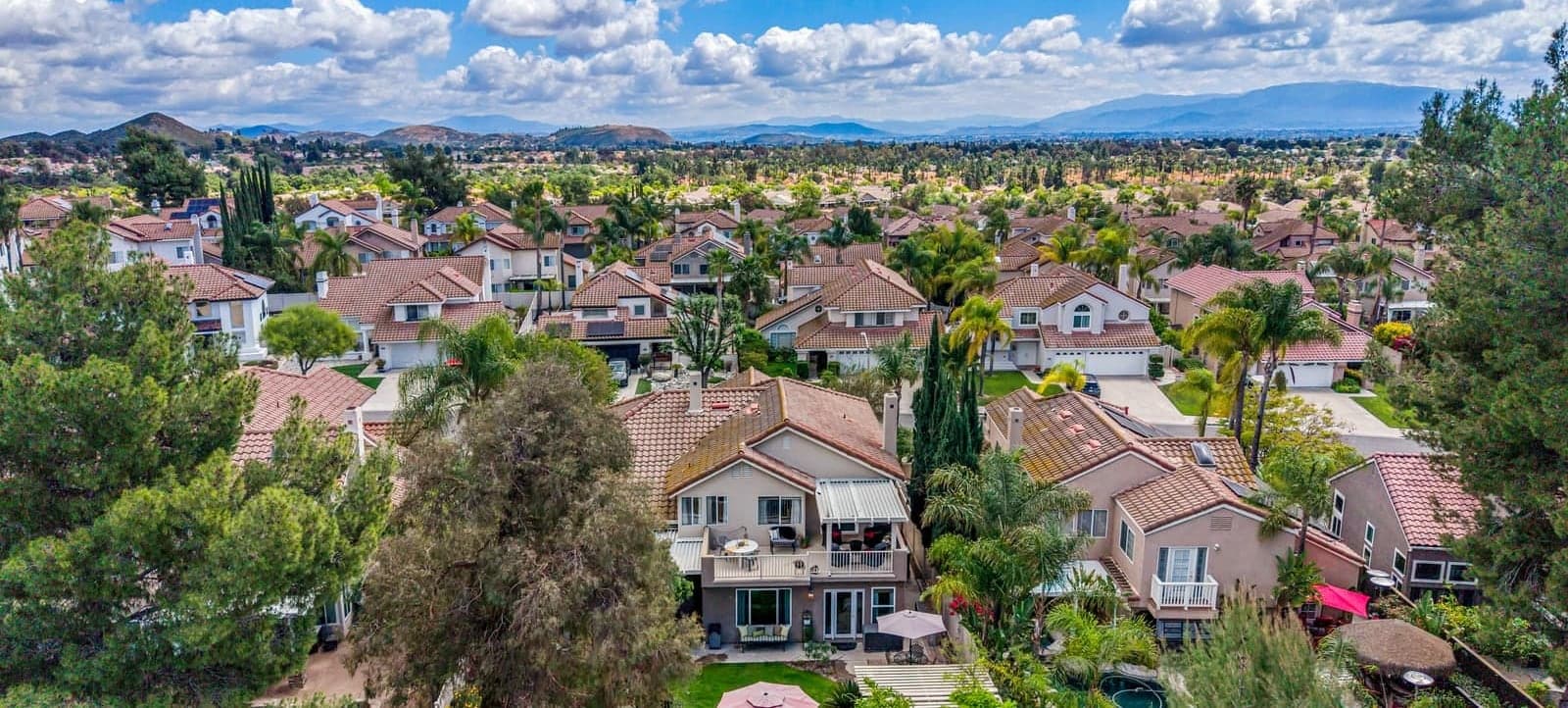
Free guide for Southwest Riverside County sellers
The Southwest Riverside County Home Seller's Guide
Selling in Murrieta, Temecula, Menifee or La Cresta, with clear answers.
Prefer a copy to keep or print? Download the PDF
Who this is for
You're thinking about selling a home in Southwest Riverside County, in Murrieta, Temecula, Menifee, La Cresta or nearby, whether that's next week or six months from now. You want to understand the decisions before anyone asks you to make them.
This covers five things: how pricing actually gets decided, which repairs return more than they cost, what a real marketing plan looks like, the disclosures that come up most out here, and what it actually costs to sell.
It doesn't contain a valuation of your home, because that requires standing in it. It also contains no market statistics, because a number written months ago and read today is worse than no number at all. What it contains is how the decisions get made, so that when you sit down with any agent you can tell whether they're thinking or reciting.

The three pricing strategies, and how to pick
There are broadly three ways to price a home, and each one is a different bet. A good agent presents all three, with the pros and cons of each. You pick. It's your equity.
At market. Price where the comparable evidence places the home. The most predictable outcome, the widest realistic buyer pool, and the least drama. This is right for most sellers most of the time.
Below market, deliberately. Price under the evidence to generate competition and let multiple buyers bid it back up. It can work well, and it carries a real risk: if the competition doesn't materialize, you've anchored low and you're negotiating up from a number you chose.
Above market, to test. Price ahead of the evidence because you believe the home is exceptional or you aren't in a hurry. Early attention is the most valuable attention a listing ever gets, and testing high spends it. If you take this route, agree the reduction trigger in advance, in writing.
What the evidence looks like out here. In a master-planned neighborhood, recent sales of the same or similar floor plans are often close by, and the evidence is strong. On acreage, a custom home or a wine country property, true comparables are rare. Pricing those takes a wider search and more judgment, and it's where walking the property matters most.
What decides the strategy isn't the agent's preference. It's your timeline, your risk tolerance, and how much genuine comparable evidence exists for your specific property.

Which repairs return more than they cost
The most common way sellers lose money is spending it on the wrong half of the list.
Usually worth doing: anything a buyer's inspector will write a paragraph about. Roof, electrical panel, drainage, plumbing, and active leaks. These don't add to your price so much as prevent a credit request that costs more than the repair would have.
Usually not worth doing: a full kitchen or bathroom renovation right before listing. You rarely recover it, and many buyers plan to change it anyway.
Almost always worth doing: cleaning, decluttering, paint where it's genuinely tired, and landscaping. They're cheap relative to their effect on how a home is perceived.
What matters more out here. A few systems come up in Southwest Riverside County inspections far more often than on the coast.
- Septic. If your home is on septic, have it pumped and inspected by a registered service provider before you list. Buyers and lenders ask about it, and a recent report answers the question before it turns into a credit request.
- A private well. If the property has one, a recent water test and a record of the pump's age do the same job.
- Solar. Owned panels are part of the house. Leased panels, or a power purchase agreement, are a contract the buyer has to take over, which usually means the solar company approves the buyer, often with a credit check and a transfer fee. Find your contract now, not in escrow.
- Air conditioning and pool equipment. Buyers here test both. Have them serviced so the inspection report says so.
The right process is a condition walk before anything is spent, producing a straight answer on what's worth doing and what isn't. For a home held a long time, more usually gets ruled out than ruled in, and that's the more valuable half of the conversation.
What a real marketing plan looks like
Plain MLS distribution means listing the home and waiting for buyers who are already searching to find it. That reaches people in the market today. It does nothing for the larger group who would move for the right house but aren't actively looking.
A real plan reaches both. Professional photography and video rather than phone photographs. A property website of its own, so the home has somewhere to be sent that isn't a portal surrounded by competitors. And a paid digital campaign that launches the day the listing does, putting the home in front of people who weren't searching yet.
Reaching buyers who don't live here yet. Some of the people who ask me about Temecula Wine Country and La Cresta are calling from Los Angeles, and what they want is space or land. A launch that only reaches buyers already searching locally misses them.
Ask any agent you interview three questions. Where specifically will this home be advertised, and with what budget? What does the media package include, and is video part of it or extra? And who coordinates the vendors, me or you?

On acreage or a wine country property, true comparables are rare, and pricing takes more judgment.
What comes up most out here
California requires sellers to disclose a lot, and the standard forms are part of every sale. A few items come up far more often in Southwest Riverside County than on the coast. Knowing them now keeps them from surprising you in escrow.
Special assessments and other special taxes. Many newer communities here sit inside a Community Facilities District, or CFD. It's a special tax that pays off bonds for things like schools and parks. It appears on your property tax bill as a CFD line, and it lasts until those bonds are paid. California requires you to make a good-faith effort to give the buyer a notice of the special tax. A recent tax bill can satisfy that notice, so set yours aside now.
Fire hazard zones. Parts of the region are mapped in high or very high fire hazard severity zones. If your single-family home is in one, California law requires you to give the buyer documentation that the property meets defensible space rules. If you don't have it, you and the buyer sign an agreement that the buyer will get it within a year of closing. Inside Murrieta, the city's fire department does these inspections. I confirm who handles your address and book it early.
HOA documents. In an HOA community, California law lists documents you must give the buyer, including the governing documents, a statement of dues and fees, and any notices of unresolved violations. Order them from the management company as soon as you decide to list. They take time.
Rural property and land use. On acreage, expect questions about the septic system, the well, and what the land can be used for. In the Temecula Valley wine country, Riverside County's Wine Country Community Plan sets which uses are allowed. Gathering permits and service records before you list makes those questions easy to answer.

What it actually costs to sell a home here
Most sellers don't see this part until they're already in escrow. Here it is up front.
Commission. Since the 2024 rule changes, what you pay your listing agent and what, if anything, you offer toward the buyer's agent are two separate decisions, and both are negotiable. I put both numbers in writing before you sign anything, and I explain exactly what each one pays for.
Transfer tax. This is a tax charged when the deed passes from you to the buyer. Riverside County charges $1.10 for every $1,000 of the sale price, so $550 on a $500,000 sale. Some cities have their own transfer tax rules, so I confirm the exact figure for your address and put it on your net sheet. The Los Angeles ULA tax doesn't apply out here, because it only covers homes inside the City of Los Angeles.
Special assessments at sale. A CFD special tax isn't normally paid off when you sell. It stays with the property, and the buyer takes it on with the tax bill. Your share for the time you owned the home is settled in escrow along with your property taxes.
Escrow, title, and county fees. Escrow fees, a title insurance policy for the buyer, recording fees, a natural hazard disclosure report, and HOA documents if you have an HOA. Several of these can be split with the buyer, and every one is itemized on your net sheet.
Getting ready, and repairs after inspection. Paint, cleaning, landscaping, a termite report, and on rural property a septic inspection. Then, once you're in escrow, any credits or repairs you agree to after the buyer's inspection. This is the group that surprises people, and good preparation shrinks it the most.
Tax on your profit. This one isn't a selling cost, but people worry about it. If you owned the home and lived in it as your main home for at least two of the last five years, federal law lets you keep up to $250,000 of profit tax-free, or up to $500,000 if you file a joint return with your spouse. Your CPA confirms your situation.
Your net sheet. Before you list with me, you get a written net sheet: the sale price at the top, every cost itemized, and the amount that actually reaches your account at the bottom. If that number doesn't work for you, it's better to find out at your kitchen table than in escrow.

What I do for sellers
When you sell with me, you're working with a Realtor® at First Key Pacific, licensed under Keller Williams Premier Properties. I work Southwest Riverside County and the Westside of Los Angeles, and my business runs almost entirely on repeat clients and referrals.
Every listing gets the full package at every price point: condition walk, vendor management, staging consultation, professional photography and video, a property website, and a paid digital launch. Not a menu, and not reserved for the expensive houses.
Selling here to buy on the Westside, or the other way around? That's two transactions in two counties, and I handle both ends, so you aren't coordinating two agents.
One next step. Ask for a valuation and I'll build a real number for your home with the reasoning shown, so you can check it rather than trust it. No obligation, and no pressure. You can also read the full process. I'm here when you're ready. Call or text me at 310.708.7717.
Questions
Frequently Asked Questions
Do I have to tell the buyer about special assessments?
Yes. California requires sellers to make a good-faith effort to give the buyer a notice of any special assessment on the property. A recent property tax bill can satisfy that notice.
Do I need a defensible space inspection to sell?
If your single-family home is in a high or very high fire hazard severity zone, you need to give the buyer defensible space documentation, or you and the buyer sign an agreement that the buyer will get it within a year of closing. I confirm who inspects your address and book it early.
What happens to leased solar panels when I sell?
The lease or power purchase agreement passes to the buyer, usually only after the solar company approves them, often with a credit check and a transfer fee. Find your contract before you list so it doesn't slow escrow.
Which pricing strategy is usually right?
Pricing at market suits most sellers most of the time, because it's the most predictable and reaches the widest realistic buyer pool. On acreage or a custom home, where comparables are rare, the evidence takes more work to build, which is why the property walk comes first.
Keep exploring
Ready to make your move with First Key Pacific?