2026-06-09 · 4 min read · Century City
Living in Century City: What to Know Before You Buy
What Century City is
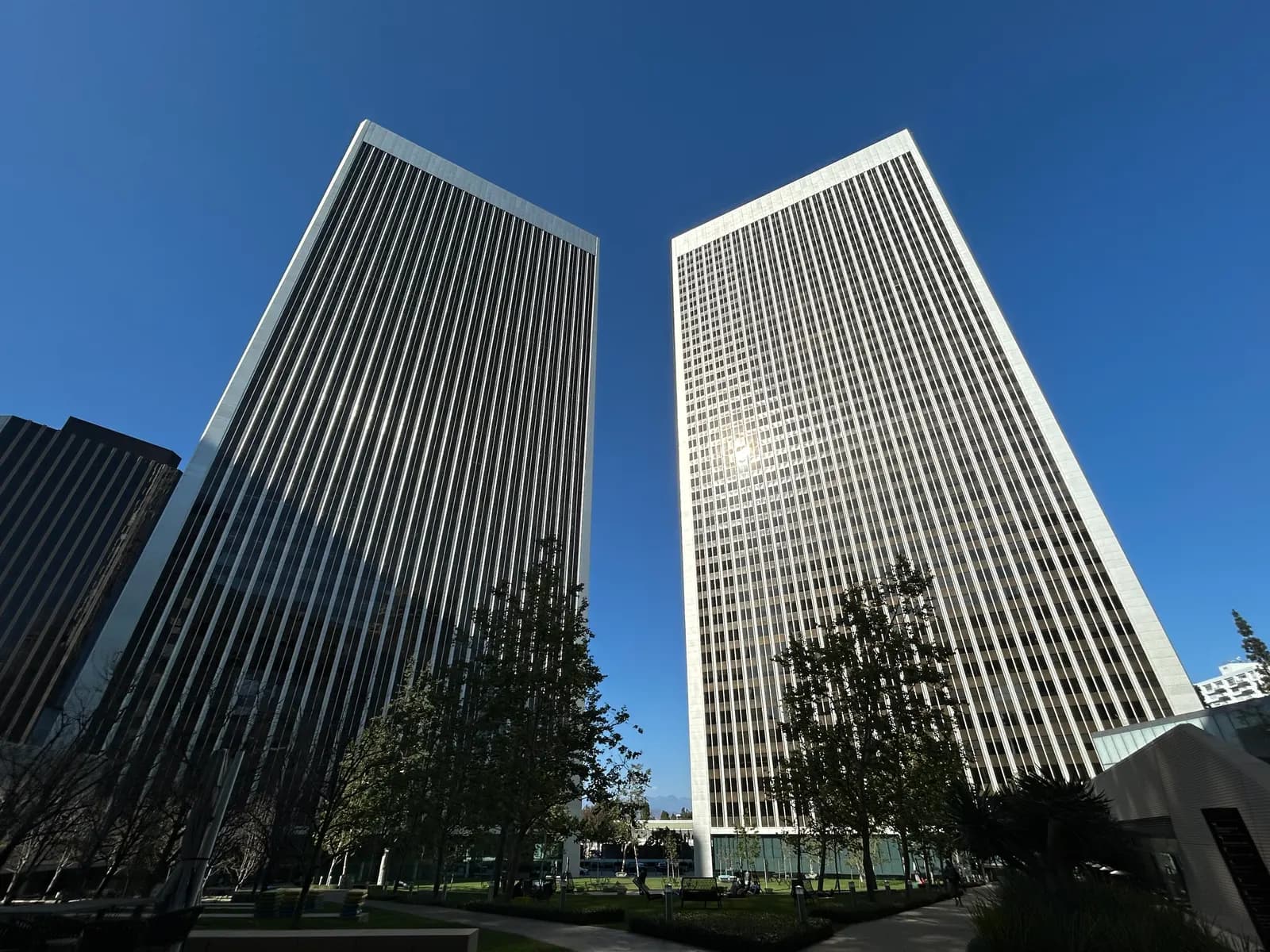
Century City sits between Beverly Hills and Westwood on land that once belonged to 20th Century Fox as a studio back lot. What stands there now is a planned commercial and residential district built around mid-century towers, and it feels unlike almost anywhere else on the Westside.
The skyline is distinct. The walkability is real. And the real estate is almost entirely condos.
What the neighborhood actually feels like
Most of Century City's residential buildings are high-rises built across several decades, from the 1960s onward. Some are full-service with doormen, concierge, and amenity floors. Others are smaller buildings from the same era without those services. A few clusters of townhomes and smaller condos exist at the neighborhood's edges.
The Westfield Century City shopping center anchors the retail experience. It is a well-maintained mall with a range of dining, an Equinox, a cinema, and major retailers. You can leave your building, run real errands on foot, and return. That is genuinely rare on the Westside.
Avenue of the Stars is the main residential and commercial corridor. The street is wide and designed for foot traffic in a way that most LA thoroughfares are not.
Getting around
By car, Century City sits near Santa Monica Boulevard and the 405, making access to the rest of the Westside, Beverly Hills, and West Hollywood straightforward when traffic is not a factor. During peak hours, that same location can mean sitting still for a while.
By foot, the neighborhood is far more walkable than much of Los Angeles. Most daily errands are within a reasonable walk of the main residential towers. Buyers who want walkability in a car-dependent city put Century City near the top of their list for that reason.
Housing stock
Century City is almost entirely a condo market at the residential level. Buildings range widely in age, finish level, and amenities. Some were updated significantly in recent years. Others retain an older feel in the common areas while individual units have been renovated by owners.
HOA fees in Century City buildings are meaningful and vary significantly. Full-service buildings with concierge, valet, and amenity floors carry higher monthly costs than smaller buildings with fewer services. That figure is worth factoring into any affordability calculation alongside the mortgage, property taxes, and insurance.
Single-family homes are rare in Century City proper. The edges toward Cheviot Hills have some detached homes, but they are not the dominant product here.
Daily life in Century City
Most homes here offer a lower-maintenance lifestyle: walkable, close to Beverly Hills, and near major Westside office towers.
Selling a Century City condo
A Century City condo sale is different from selling a single-family home, and the marketing has to reflect that. Buyers in these buildings tend to comparison-shop actively. The same floor plan may have sold two or three times in the past few years at different price points. Condition and presentation matter a great deal when the bones are identical to the unit above and below.
Professional media matters more here than almost anywhere on the Westside, because photos are often the first differentiator between two listings in the same building. If you are thinking about selling in Century City, read how I approach pricing a Westside home and what prep actually moves the needle.
Century City compared to nearby neighborhoods
Beverly Hills has name recognition that Century City does not. Westwood has the UCLA campus and its own retail character. Century City is quieter by day once you leave the mall area, and the residential towers feel more self-contained. For a different type of Westside living, the guides to Playa Vista and Westchester are worth a look.
Thinking about buying or selling in Century City?
I work with buyers and sellers throughout Westside LA, including Century City. If you want to talk through what the market looks like right now or what your unit might be worth, book a consultation. No pressure, just real answers.
What happens next
Selling is a long list of small decisions, and most sellers make them alone. That is the part First Key Pacific takes off your plate in Century City. When you are ready to talk it through, reach out and we will map it out properly.
Common questions
- Is Century City walkable by Los Angeles standards?
- Yes, more so than most of the Westside. The Westfield Century City shopping center, several restaurants, and many daily errands are within a reasonable walk of the main residential towers. By the standards of most LA neighborhoods, that is genuinely unusual.
- What types of homes are available in Century City?
- Century City is predominantly a condo market. Residential buildings range from 1960s high-rises with amenity floors and concierge service to smaller, quieter buildings with fewer services. Single-family homes are rare in the neighborhood proper, though the edges toward Cheviot Hills have some detached homes.
- What should buyers know about HOA fees in Century City?
- HOA fees vary significantly by building and by what the building provides. Full-service buildings with doormen, concierge, valet, and amenity floors carry higher monthly fees than smaller buildings with fewer services. This cost is real and worth factoring into your affordability calculation alongside your mortgage payment, property taxes, and insurance.
- How does Century City compare to Beverly Hills and Westwood?
- Beverly Hills has stronger name recognition and a distinct retail corridor. Westwood has the UCLA campus and its own character. Century City tends to be quieter once you leave the mall area. The residential towers feel self-contained in a way that suits buyers who want walkability, proximity to Westside employers, and a lower-maintenance lifestyle. Each area has its own tradeoffs.