2026-06-16 · 6 min read · Santa Monica
Living in Santa Monica: A Neighborhood Guide for Buyers and Sellers
Where this starts
Santa Monica is one of the most recognizable addresses on the Westside, and for good reason. The beach is real, the walkability is real, and the real estate market tends to reflect both. If you are thinking about buying in Santa Monica, selling there, or just trying to understand what the city actually offers compared to neighboring areas, this is the overview you need.
The basics: what Santa Monica is and where it sits
Santa Monica is an independent city, not a neighborhood of Los Angeles, which surprises some people. It has its own city government, its own police and fire departments, and its own school district: the Santa Monica-Malibu Unified School District. It sits at the western edge of the Westside, bordered by Pacific Palisades to the north, Brentwood to the northeast, West Los Angeles and Mar Vista to the east, Venice to the south, and the Pacific Ocean to the west.
The city covers about eight and a half square miles, and it has a dense, walkable urban core unlike most of greater Los Angeles. That is part of the appeal.
Neighborhoods within Santa Monica
Buyers often ask which part of Santa Monica they should focus on. There are real differences worth knowing.
North of Montana is the city's most expensive pocket. Wide streets, larger lots, tree-lined blocks close to the mountains. Homes here regularly trade at the top of the Santa Monica market.
Wilshire-Montana runs south of Montana Avenue and offers a mix of single-family homes, condos, and low-rise apartments. Montana Avenue itself is a neighborhood commercial street with shops, cafes, and restaurants that residents use constantly. Prices here generally come in somewhat below north of Montana.
Mid-City sits in the heart of Santa Monica, close to the Third Street Promenade and Santa Monica Place. High walkability scores. Mostly condos and some single-family homes. The Main Library is here, along with City Hall and Santa Monica College.
Ocean Park is a quieter section in the southern part of the city, just above Venice. It has a neighborhood feel with street markets, coffee shops, and local restaurants. A mix of bungalows and condos.
Sunset Park is one of the more residential sections, slightly inland from the beach corridor. More single-family homes on standard lots, with slightly more space per dollar than the north-of-Montana area.
Pico is the area around Pico Boulevard near the southern end of the city. Primarily residential, with good proximity to both the beach and the freeway. Buyers who want a house over a condo and want to be in Santa Monica at a lower entry price often look here first.
Getting around
Santa Monica is one of the few Westside cities where you can genuinely live without a car if you choose to. The Metro E Line runs from Santa Monica to downtown Los Angeles and connects to broader Metro rail lines. Santa Monica's Big Blue Bus serves the local area and connects to the wider LA transit network.
For drivers, the 10 freeway enters the city from the east and terminates near the Pacific Coast Highway interchange. Traffic on the 10 heading east during mornings can be heavy, which is a real consideration for buyers who commute inland.
Schools
Santa Monica is served by the Santa Monica-Malibu Unified School District. School assignment depends on the address, so confirm it with the district before making an offer.
The real estate market
Santa Monica is a premium market. Single-family homes in most parts of the city start well above what you would pay in neighboring Mar Vista or Culver City for a comparable size. The beach proximity, walkability, and the address itself all contribute to sustained demand. Condos vary significantly by building and neighborhood.
Homes in Santa Monica draw the strongest interest when they are priced right and marketed well. Buyers competing here typically come pre-approved and often with substantial down payments, because the price points mean most financing is jumbo. If you are selling in Santa Monica, how you present the home and how you launch it matters.
For a comparison of Santa Monica to neighboring areas, see Mar Vista vs Venice or Playa del Rey vs Marina del Rey.
What it is actually like to live there
The Third Street Promenade is a pedestrian shopping and dining street that draws visitors from across LA and tourists from around the world. Main Street in Ocean Park has a different energy: more neighborhood scale, more local. Both are within walking distance for most Santa Monica residents.
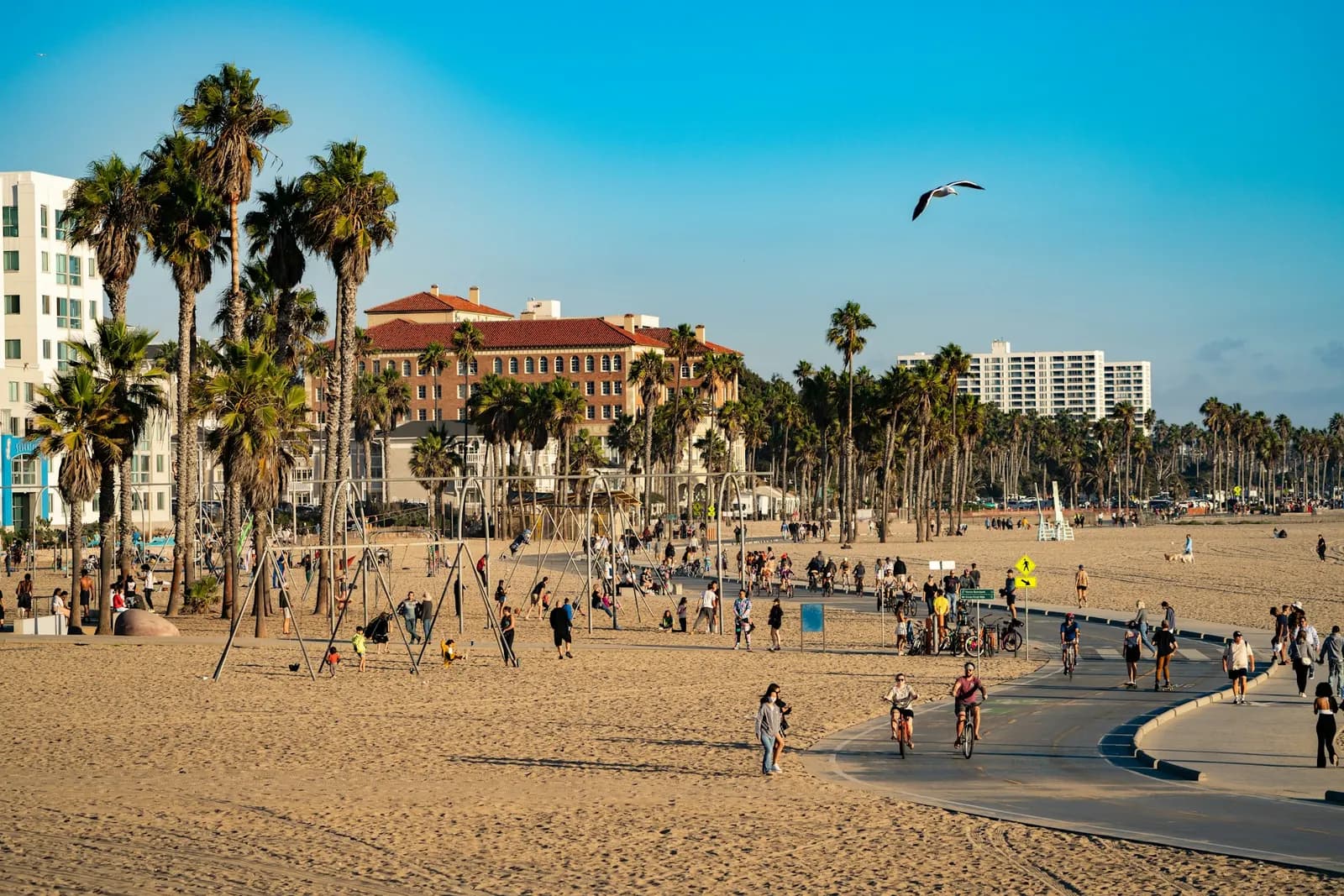
The Santa Monica Pier sits at the foot of downtown, and Palisades Park runs along the bluffs above the beach. Running and cycling paths extend the length of the beach. The farmers market at Arizona Avenue runs on Wednesdays and Saturdays and has a devoted following.
The weather is typical coastal Southern California: the marine layer rolls in many mornings and burns off by noon or early afternoon. Temperatures stay moderate year-round, with less heat than the inland Westside in summer.
Questions to consider before you buy in Santa Monica
A few things worth checking before you make an offer:
- Which schools serve this address? Confirm assignment with the district.
- Is the building or unit rent-controlled? Santa Monica has its own Rent Control Board and local ordinances that are more tenant-protective than California state law. If you are buying a multi-unit property, this affects your options significantly.
- What are the HOA dues and what do they cover? In condos, these vary widely and affect your carrying costs.
- How is this priced relative to recent comparable sales on this specific block? One block can trade differently from another.
Thinking about selling in Santa Monica
If you have owned in Santa Monica for a long time, you likely have significant equity and a property tax base well below the current market value. That has tax implications when you sell, including capital gains considerations and California Prop 19 property tax portability options. Read about capital gains tax when selling a long-held LA home for a key part of that picture.
The market in Santa Monica responds well to strong launches. Professional media, a Coming Soon runway, and a clean presentation tend to produce competition. I work across the Westside and bring the same concierge process to every sale, from start to finish. For the full picture of what that looks like, see how to sell a home in Westside Los Angeles.
If you want to talk through what your Santa Monica home is worth and what a sale would look like, book a consultation. No pressure, just real answers.
The next step
Knowing which house is a good idea and which is not is the whole job. That is what I do for buyers in Santa Monica at First Key Pacific. When you are ready to start, send me a note.
Common questions
- What is the most expensive neighborhood in Santa Monica?
- North of Montana, sometimes called NoMo, consistently trades at the top of the Santa Monica market. Wide lots, tree-lined streets, and proximity to the bluffs make it one of the most sought-after stretches of the Westside.
- What school district covers Santa Monica?
- The Santa Monica-Malibu Unified School District serves Santa Monica. It covers both cities. School assignment depends on the address, so confirm it with the district before making an offer.
- Is Santa Monica rent-controlled?
- Yes. Santa Monica has its own Rent Control Board and local ordinances that go beyond California state rent control law. If you are buying a multi-unit property in Santa Monica, the rent control rules significantly affect what you can do with the units. Review the specifics with a local real estate attorney before you buy.
- How does Santa Monica compare in price to Mar Vista or Culver City?
- Santa Monica generally commands a meaningful premium over neighboring Mar Vista and Culver City, driven by beach proximity, walkability, and the address itself. Buyers who want more square footage for their dollar often look east toward those areas.
- What is the best way to commute from Santa Monica to downtown Los Angeles?
- The Metro E Line runs from downtown Santa Monica to downtown Los Angeles and connects to the broader Metro rail network. For drivers, the 10 freeway is the primary route but can be slow during morning hours heading east. Commute time varies significantly by hour and direction.