2026-06-08 · 4 min read · Hollywood Hills
Living in Hollywood Hills: A Los Angeles Neighborhood Guide
Where this starts
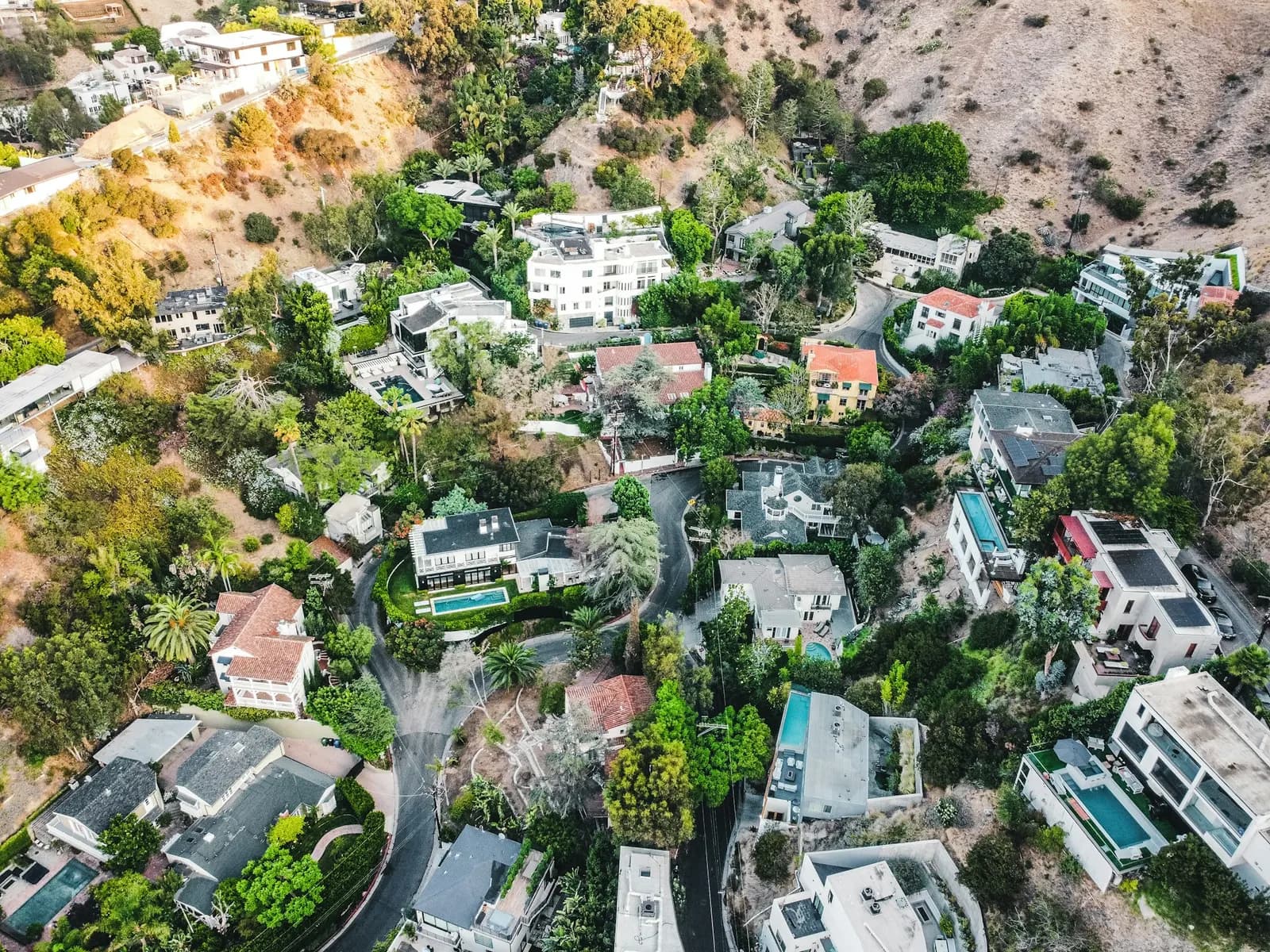
Hollywood Hills sits above the rest of Los Angeles in a way that is partly geographic and partly something harder to name. The canyon roads are narrow and winding. The views from the right hillside can stop you mid-sentence. The homes run from 1930s Spanish bungalows to recent architectural builds, often on the same block. If you are thinking about buying here, or selling a home you have held here for years, this guide gives you an honest picture of what living in Hollywood Hills is actually like.
What Hollywood Hills actually covers
The name covers a wide stretch of the Santa Monica Mountains above Hollywood and Laurel Canyon. It is generally divided into two main areas. Hollywood Hills West runs west along Mulholland Drive and includes Laurel Canyon, Outpost Estates, and Nichols Canyon. Hollywood Hills East covers Beachwood Canyon, Cahuenga Pass, and the streets closest to Griffith Park. The character, the prices, and the canyon feel vary between these areas, sometimes quite a bit.
Laurel Canyon
Laurel Canyon is one of the most recognizable names in the Hills. It has a feel all its own: tree-canopied roads, older cottages alongside newer builds, a small market and coffee shop at the canyon crossroads, and a quieter pace than you would expect given how close it sits to the Sunset Strip below. Homes here tend toward the eclectic, with a wide range of architectural styles and lot configurations.
Outpost Estates and Nichols Canyon
Outpost Estates sits at the eastern edge of Hollywood Hills West, with roads that wind steeply up from Franklin Avenue. The homes are often larger here, and the views more dramatic. Nichols Canyon, just west of Outpost, is quieter still, a narrow canyon road lined with trees that makes the city feel far away even when you are not. These pockets draw buyers who want the view and the separation without the full drive up Mulholland.
Beachwood Canyon
Beachwood is below the Hollywood Sign. The canyon village at the base, with its small collection of shops and cafes, has the feel of a neighborhood that has been there for a long time and intends to stay. Homes climb steeply from the village up into the hills, where the sign is close enough to feel like a landmark rather than a tourist attraction. The roads get narrow fast. Parking is worth checking carefully before you buy.
Homes and price points
Hollywood Hills homes are almost entirely single-family, with some small condos and townhomes at the lower hillside elevations. The range is wide: original 1930s and 1940s cottages, mid-century modern with flat roofs and walls of glass, and recent rebuilds that go straight up the hillside to maximize the view. A flat lot is unusual here, and lot configuration affects both livability and price significantly. Views, privacy, and condition drive the number more than square footage alone. A real valuation comes from an actual analysis of the specific property, not an online estimate. For how I build that number, here is how I find what a home is actually worth.
Getting around and the trade-offs
The canyon roads are scenic and can also be slow. Getting out in the morning when traffic backs up on Laurel Canyon Boulevard or Cahuenga is the main adjustment for people coming from flatter neighborhoods. Most residents drive everywhere; walkability is limited except near the canyon village areas. The hillside quiet and the views are the trade Hollywood Hills residents choose willingly.
Parks, trails, and outdoor space
Runyon Canyon Park is one of the more heavily used open spaces in Los Angeles, with trails ranging from a moderate walk to a steeper climb and views of the basin from the top. Griffith Park, just east of the Hills, offers trails, the Observatory, the Greek Theatre, and the Los Angeles Zoo. The hiking access from Hollywood Hills is a defining feature for many residents, and it tends to be year-round.
Buying and selling in Hollywood Hills
Buyers coming to Hollywood Hills for the first time often underestimate how much the specific street, lot, and orientation matter. Two homes listed at similar prices on different sides of the same hill can be completely different experiences. When I work with buyers here, I walk the property carefully and give a real read on what I see before an offer goes in. For the full picture of how I approach buyer representation, here is the guide to buying a home in Westside Los Angeles.
For sellers, the same detail matters. A home with a clear view and a clean launch reaches the buyers who will pay for exactly that. I run every listing with AI-driven digital targeting and concierge service from contract to close, so the home reaches the buyers most likely to value it. That approach is in why I launch every listing like a product.
Work with an agent who's here when you're ready
Hollywood Hills has enough variation, block by block and canyon by canyon, that you want an agent who knows how to read a hillside property and will be reachable when you have questions. I handle everything, and I give you real answers with no pressure. Your next chapter starts here.
If you want to talk through a specific Hollywood Hills home or neighborhood, book a consultation and I will give you a real picture of what you are weighing.
What happens next
If you are weighing a sale in Hollywood Hills, the useful first conversation is not about a listing price. It is about what your home needs, what it will cost, and what it is likely to return. First Key Pacific is my practice, and I walk the property before anyone spends a dollar. Tell me about your home and we will start there.
Common questions
- What are the main neighborhoods within Hollywood Hills?
- The two main areas are Hollywood Hills West, which includes Laurel Canyon, Outpost Estates, and Nichols Canyon, and Hollywood Hills East, which covers Beachwood Canyon and the streets near Griffith Park. Each has a distinct character and price range.
- Is Hollywood Hills walkable?
- For most of the Hills, no. The canyon roads are not built for walking errands, and most residents drive. The canyon village areas near Beachwood and Laurel Canyon crossroads are the exceptions, with a few shops and cafes within walking distance.
- What types of homes are in Hollywood Hills?
- Mostly single-family homes ranging from 1930s and 1940s cottages to mid-century modern to recent rebuilds and architectural new construction. Flat lots are rare; most homes sit on hillside lots where views, orientation, and access all affect value.
- What is the difference between Hollywood Hills East and Hollywood Hills West?
- Hollywood Hills West includes Laurel Canyon, Outpost Estates, and Nichols Canyon, generally closer to the Sunset Strip and West Hollywood. Hollywood Hills East covers Beachwood Canyon and the streets near Griffith Park, with a different access pattern and feel.
- What parks and trails are near Hollywood Hills?
- Runyon Canyon Park is right in the Hills, with trails and views of the basin. Griffith Park sits just east and offers far more acreage, the Observatory, the Greek Theatre, and the Los Angeles Zoo. Hiking access from Hollywood Hills is year-round and genuinely excellent.